
How to jump rope for beginners
Start with one turn and one small jump. Reset, try again, then link a few comfortable jumps together. Short attempts and generous breaks give you room to learn the rhythm.
By JUMPROPE editorial team
Published 3 min read
Updated
General education from the app team. Not an individualized training plan.
Set up before you start
You need a rope you can control, comfortable training shoes, and a clear space. Take a moment to check your setup before your first turn.
- Check the rope and handles for wear. Adjust the length using your rope manufacturer's instructions, while standing upright.
- Leave clearance overhead, in front, and behind you. Keep furniture, other people, and loose objects outside the rope's path.
- Choose a stable, non-slip surface. Put your phone where you can see it without placing it in your jumping area.
Find your basic jump
Rehearse a few small jumps without the rope first. Then place the rope behind you, make one turn, and jump just enough for it to pass. Stop and reset before trying again.
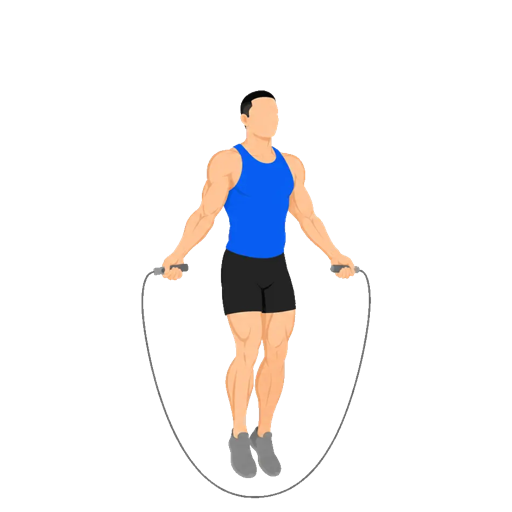
Stand tall
Look ahead and let your shoulders relax.
Turn with your wrists
Keep your elbows comfortably near your sides.
Keep the jump small
Leave your knees soft as you land and reset.
These reminders follow the ACE technique resource in the sources below. Once single turns feel predictable, link two or three together. If the rope catches, pause and check one thing at a time instead of speeding up.
Try a short practice
Warm up with a few minutes of comfortable movement first. This is an optional practice example from our editorial team, not a fitness test or an individualized prescription. Fewer rounds or longer breaks are fine.
- Preparation
- 10 sec
- Work
- 15 sec
- Rest
- 45 sec
- Rounds
- 6
5 min 25 sec total, before warm-up and finishing movement. Rest between rounds, with no extra rest after the last round.
- During work, try a few controlled jumps. There is no need to keep jumping for all 15 seconds.
- During rest, put the rope down, breathe comfortably, and reset your position.
- Repeat only while the amount feels manageable. Stop after your final work interval and finish with easy movement if comfortable.
Make it easier when you need to
You can spend a work interval rehearsing the arm movement without jumping. You can also stop the timer and return to single attempts. The goal is control, not completing every second.
Repeat a manageable session before increasing it. Change one setting at a time so you can judge how the new amount feels. Avoid promising yourself daily jumping before you know how you recover.
Choose your next session
Notice what interrupted your rhythm: rope fit, hand position, or timing. Give your next practice one focus. For example, try keeping your hands in the same place through three turns.
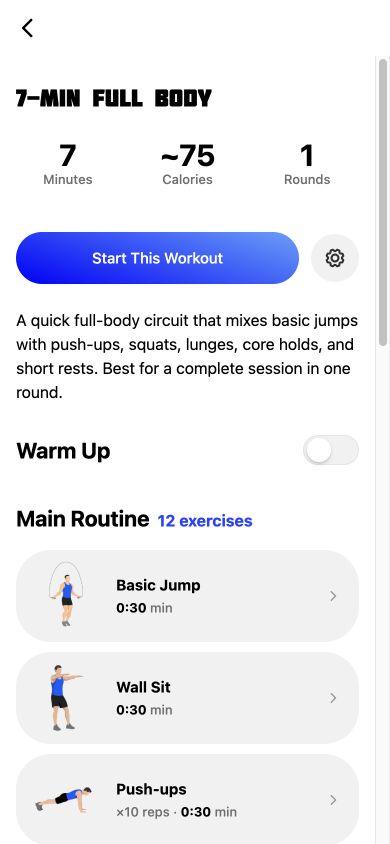
In the app, preview the duration and exercise list before you start. Choose a session for the skills and equipment you have today. The workout shown below is a library example, not the practice settings above.
Before you train
Choose an amount of jumping that suits your current ability. Stop for pain, dizziness, or unusual breathlessness. If an injury or health condition affects exercise, seek advice from a qualified health professional.
Sources and editorial notes
Sources support the equipment and technique discussion. Practice formats are JUMPROPE editorial suggestions, not study protocols. This article has not been independently reviewed by a clinician or coach.
Your next session starts here.
Take what you learn into JUMPROPE with guided workouts, interval timers, and voice cues.
Keep learning
Technique3 min read
Common jump rope mistakes and how to fix them
Troubleshoot missed jumps, wandering hands, and rushed intervals with a simple one-change-at-a-time practice method.
Rope equipment3 min read
Light vs heavy jump rope: choosing your session
Understand rope weight, plan transitions, and learn how light and heavy rope sessions work in Jump Rope Training.
Workout planning3 min read
How to use a jump rope interval timer
Understand preparation, work, rest, and rounds, then follow your intervals in the Jump Rope Training app.